
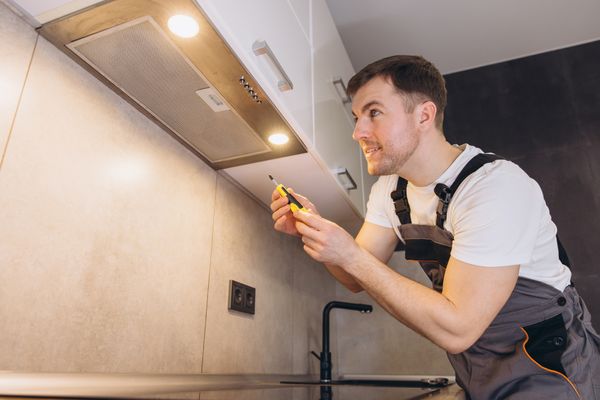
A great kitchen starts with clean air, but cooking can fill your home with smoke, grease, and odors. At the standard width, a 30 inch range hood is your best defense, protecting your health and your kitchen surfaces from airborne contaminants.
Installing one might seem simple, but precision is key. Correct measurements and proper installation mean the difference between an efficient system and one that fails to do its job. This range hood guide will walk you through every step, ensuring you get professional results for a cleaner, safer cooking space.
Discover 30" Range Hood Deals
Looking for reliable kitchen ventilation? Shop 30" range hoods at Speciatly Appliance!
Shop 30" Range HoodsHow to Measure the Height for a 30 Inch Range Hood

Understanding range hood height is critical for both safety and performance. Installing a hood at the wrong height can lead to reduced ventilation efficiency, increased fire risk, or difficulty accessing cookware. The proper height for a range hood depends primarily on the type of cooking appliance beneath it.
Why Proper Clearance Matters
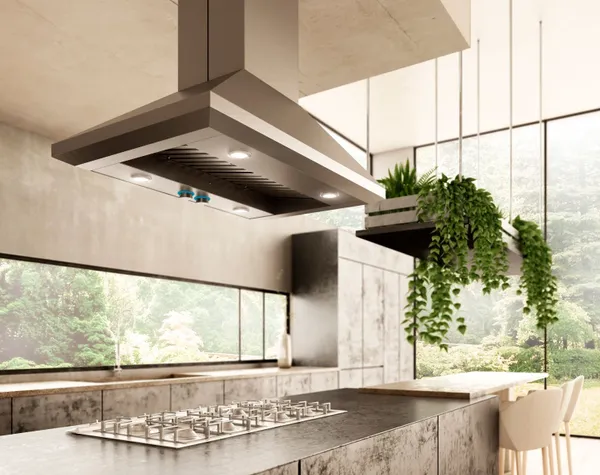
Installing a 30 inch range hood at the wrong height can cause two main issues:
- A 30” Range Hood Too High: Poor ventilation allows smoke and grease to escape, resulting in residual odors, grease buildup, and reduced air quality. It also leads to an overworked motor, consuming more energy and wearing out faster.
- A 30” Range Hood Too Low: Safety risks increase with the integration of tall cookware, and flames from gas burners could cause fire hazards or damage the appliance.
Keep in mind, gas ranges need more clearance than electric cooktops due to open flames and overall higher heat output. Hoods placed too close can overheat, warp, or even ignite grease buildup, compromising safety and functionality.
How to Measure 30” Range Hood Height
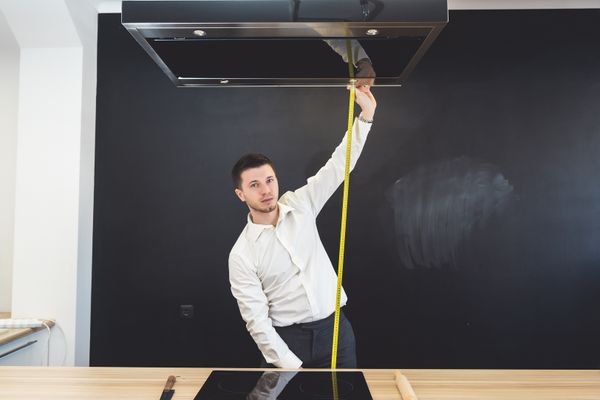
As always, the golden rule of thumb is to measure your space to ensure proper installation. Here’s a quick guide to measuring the height for a 30” range hood.
Step 1: Identify the Cooking Appliance Type
Do you have a gas or electric cook appliance? Gas ranges need 28-36 inches of clearance, while electric cooktops require 24-30 inches. Check the manufacturer’s specifications for both the range and the 30 inch range hood.
Step 2: Measure from the Cooking Surface
For gas ranges, mark 30 inches above the center of the cooking surface. For electric cooktops, mark 27 inches to accommodate standard cooking needs.
Step 3: Account for Range Size Variations
If you have a 30” cooking appliance, installing a range hood directly above is no problem. When installing a 30 inch range hood over a 36-inch range, center it with 3 inches of overhang on the side with the most heat (the manual usually lists how many BTUs or watts of power each cooking zone produces). The height of range over stove stays standard, though capture efficiency may vary.
Step 4: Mark the Mounting Height
Add the hood's height to the clearance measurement to determine the mounting bracket position. For most wall-mounted hoods (18-24 inches tall), the bracket will sit 45-54 inches from the floor for gas ranges.
Step 5: Verify with a Level
Ensure the marked line is perfectly horizontal with a level before drilling to avoid uneven airflow or a crooked hood.
Learn More: What's the Ideal Range Hood Height?
Why Measuring the Width for a 30 Inch Range Hood Matters
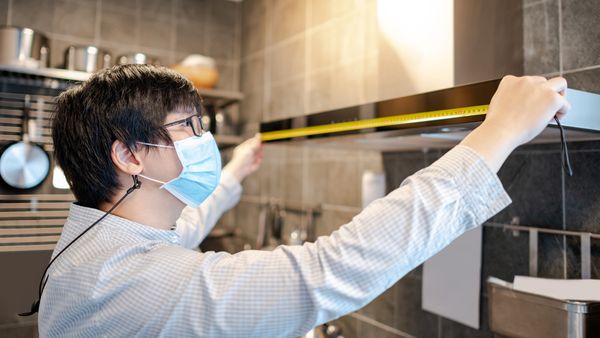
Range hood width plays a fundamental role in ventilation effectiveness. The capture area must extend beyond the cooking surface to intercept rising smoke and grease before they escape into the kitchen environment. Understanding width requirements helps homeowners make informed decisions about hood selection and placement.
The Importance of Adequate Capture Area
When cooking, thermal plumes (a.k.a. hot air columns) rise from the burners, carrying contaminants upward. These plumes expand as they rise, spreading beyond the cooktop's edges. A 30 inch range hood installed over a 30-inch range offers minimal overhang, which might allow smoke and grease to escape.
Best practices recommend a hood that extends at least 3 inches beyond each side of the cooktop. This extra width creates a buffer zone to capture expanding plumes more effectively.
30-Inch Hood vs. Larger Range Considerations
Can a 30 inch range hood ventilate a 36-inch range? It depends on cooking intensity. For light cooking like steaming or sautéing, a 30-inch hood can work if placed correctly and used at higher fan speeds.
If you regularly use high-heat cooking like searing or stir-frying, the 3-inch gap on each side allows smoke and grease to escape, reducing efficiency by 30-40%. Grease buildup, odors, and poor air quality can result from undersized hoods. Serious cooks should choose a hood that matches or exceeds the width of their range for optimal ventilation.
How to Measure 30” Range Hood Width
Use these quick steps to determine if your kitchen setup is compatible with a 30 inch range hood.
Step 1: Measure the Range Width
Use a tape measure to determine the exact width of your cooking surface from edge to edge. While standard ranges are typically 30 or 36 inches, always verify the actual dimensions instead of relying on the model name. Precise measurements are key to proper hood selection.
Step 2: Calculate Ideal Hood Width
To ensure optimal performance, add 6 inches to the range width to determine the ideal hood size.
- A 30-inch range works best with a 36-inch hood.
- A 36-inch range benefits from a 42-inch or 48-inch hood.
Step 3: Assess Available Space
Before installing the hood, measure the space around the range. Check the distance between cabinets or walls, and look for obstacles such as light switches, outlets, or decorative features that might interfere with installation.
Step 4: Mark the Center Point
Locate and mark the exact center of the cooking surface. This ensures the hood is properly aligned with the range.
A 30 inch range hood should center directly over the cooking surface, with equal overhang on both sides. If centering is not possible due to space constraints, prioritize coverage over the burners you use most often.
Step 5: Consider Aesthetics and Proportion
Performance is the priority, but the look of the hood also matters. A 30 inch range hood above a 36-inch range may function adequately for light cooking but could appear too small, disrupting the overall balance of your kitchen design. Always aim to match functionality with visual harmony.
Does Depth Matter for a 30 Inch Range Hood?
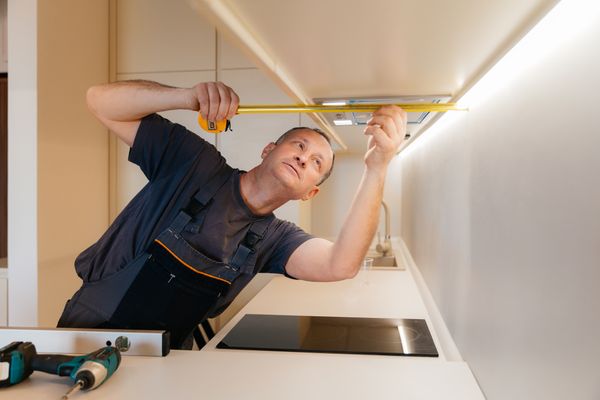
Range hood depth receives less attention than height and width, but it significantly impacts ventilation performance. The depth dimension determines how far the hood projects from the wall, creating the front edge of the capture zone that intercepts rising contaminants.
That’s because cooking appliances are typically 24-30 inches deep, and a 30 inch range hood should align with the front burners to effectively capture contaminants. If the hood is too shallow, rising fumes can escape, reducing performance.
How Deep Should a Range Hood Be?
Most residential hoods are 18-24 inches deep and are compatible with standard ranges. For commercial-style ranges over 30 inches deep, larger hoods are needed to maintain efficiency and capture rising plumes from the overhand.
Measuring Range Hood Depth
Luckily, measuring a space to fit a 30 inch range hood is a simple concept. Follow these steps to determine how deep of a range hood you need for your kitchen.
Step 1: Measure Range Depth
First, measure from the wall to the very front edge of your cooking surface. This number is the minimum range hood depth you need for your cooking station.
Step 2: Determine Hood Projection
Next, check the specs for the hood you're interested in. The manufacturer will list a "depth" or "projection" measurement. This tells you how far the hood will extend from the wall.
Step 3: Calculate Front Overhang
For the best performance, a hood should hang about 18 to 22 inches away from the wall. This is the standard coverage necessary to catch the expanding cooking fumes. To find the overhang for a specific model, simply subtract the range depth from the hood depth.
Step 4: Account for Wall Thickness
If you're installing a range hood on an exterior wall, don't forget about the ductwork. You'll need to measure the wall's thickness, including any siding or insulation on the outside. This measurement is crucial for a smooth ductwork installation.
Step 5: Mark Depth Requirements
Finally, take all your measurements and mark them on the wall where you'll be installing the hood.
These visual guides are incredibly helpful. They prevent installation-day surprises and confirm you have enough clearance to open cabinets or use other nearby fixtures. Simply:
- Mark where the front edge of the hood will be positioned relative to the range.
Installing a 30 Inch Range Hood
Even a quality range hood can become inferior when used wrong. That’s why proper installation is important for efficient ventilation. Use these range hood exhaust installation tips from our experts to ensure a successful installation of wall-mounted, under-cabinet, island, and insert range hoods.
Attention! | Always cut power before installing appliances. Shut off the circuit breaker and confirm power is off with a voltage tester.
30-Inch Island Range Hood Installation
Island range hoods are suspend from the ceiling over cooking surfaces located away from walls. Installing these hoods can be challenging due to exposed ductwork and the need for ceiling-mounted support. Follow these steps to ensure a safe and efficient installation (CLICK THE ➕TO LEARN MORE):
➕Step 1: Locate Ceiling Joists
Island hoods must be securely attached to structural members that can support 50-100 pounds, depending on the hood's weight and ducting materials. Use a stud finder to identify ceiling joists in the installation area. Clearly mark the locations of the joists.
➕Step 2: Determine Duct Path
Plan the route for the ductwork from the hood to the exterior: Island hoods often require longer duct runs, which may pass through attic spaces or between floor joists. By planning a route for the ductwork from the hood to the exterior, you can minimize bends and horizontal runs and maintain airflow efficiency.
➕Step 3: Install Ceiling Support Bracket
Attach the mounting bracket provided by the manufacturer to the ceiling joists. Use screws or bolts that are appropriate for the weight of the hood and ductwork. Then, ensure the bracket is level in all directions and centered over the cooking surface.
➕Step 4: Run Ductwork
Before mounting the hood, install the ductwork. Use rigid metal ducting whenever possible; flexible ducting can reduce airflow efficiency by 25-40%. Next, secure all duct connections with metal tape to prevent leaks. For long runs, use brackets to provide adequate support.
➕Step 5: Connect and Mount Hood
With assistance, lift your 30-inch range hood and attach it securely to the ceiling bracket. Follow the manufacturer's range hood installation guide for specific hardware and attachment points. Connect the ductwork to the hood's exhaust outlet, ensuring airtight seals for proper ventilation.
➕Step 6: Complete Electrical Connection
Run electrical wiring through the ceiling to the hood's junction box, adhering to manufacturer specifications and local electrical codes. Note that many jurisdictions require a licensed electrician for new electrical installations.
30-Inch Under Cabinet Hood Installation
Under-cabinet hoods mount to the bottom of existing wall cabinets, making them popular choices for kitchens with traditional layouts. This how to install a range hood approach offers simplicity and cost-effectiveness (CLICK THE ➕TO LEARN MORE):
➕Step 1: Remove Cabinet Bottom Panel
Many under-cabinet installations require removing or modifying the cabinet bottom to accommodate ducting. Carefully remove the panel, preserving it for reinstallation if needed.
➕Step 2: Cut Duct Opening
Mark and cut the duct opening according to manufacturer specifications. For rear under cabinet hood venting, the opening passes through the cabinet back and wall. For top under cabinet hood venting, cut through the cabinet and into the soffit or ceiling space.
➕Step 3: Prepare Mounting Surface
Ensure the cabinet bottom provides adequate support for the hood weight. Add blocking or reinforcement if necessary, especially for heavy stainless steel models.
➕Step 4: Install Ductwork
Route ducting from the 30 inch range hood location to the exterior. For wall venting, install a wall cap on the exterior. For roof venting, install a roof jack with proper flashing.
➕Step 5: Mount the Hood
With assistance, lift the hood into position and align mounting holes with the cabinet bottom. Insert screws through the provided holes, tightening them evenly to ensure level installation. Do not overtighten; it can warp thin cabinet materials.
➕Step 6: Connect Power and Test
Complete electrical connections and restore power. Test all fan speeds and lights to verify proper operation before reinstalling cabinet panels or trim pieces.
30-Inch Wall Mounted Hood Installation
Wall-mounted hoods attach directly to the wall surface, offering visual impact and powerful ventilation. This installation style works well for kitchens with open layouts or as focal points in design schemes. Here’s how to install one (CLICK THE ➕TO LEARN MORE):
➕Step 1: Locate Wall Studs
Wall-mounted hoods require attachment to studs for secure installation. Find and mark stud locations within the mounting area. If stud spacing doesn't align with mounting brackets, install a mounting board across multiple studs.
➕Step 2: Install Wall Mounting Bracket
Attach the mounting bracket to wall studs at the predetermined height. Use a level to ensure perfect horizontal alignment.
➕Step 3: Create Duct Pathway
Cut an opening through the wall for ductwork, ensuring it aligns with the hood's exhaust outlet. For exterior walls, account for insulation and siding when determining cut depth. Install a wall cap on the exterior, sealing it properly against weather.
➕Step 4: Mount the Hood
With assistance, lift the 30 inch range hood and hang it on the wall bracket. Some models slide onto brackets, while others require screwing through the hood body into wall studs. Consult the manual for specific instructions before mounting installing.
➕Step 5: Install Chimney Extension
Wall-mounted hoods typically include chimney sections that conceal ductwork and wiring. Slide these sections into place and secure them according to manufacturer instructions. Adjust the extension length to reach the ceiling.
➕Step 6: Final Connections
Connect ductwork to the hood's exhaust outlet using metal tape for airtight seals. Complete electrical connections and restore power. Test all functions before completing installation by securing any trim pieces or filters.
30-Inch Insert Range Hood Installation
Range hood inserts install into custom cabinetry, providing built-in appearance with professional-grade performance. These units require careful coordination between cabinetry and hood dimensions. Follow these steps for installation (CLICK THE ➕TO LEARN MORE):
➕Step 1: Verify Cabinet Opening
Measure the custom cabinet opening and compare it to insert specifications. The opening should provide exact clearances specified by the manufacturer (typically 1/4 to 1/2 inch on all sides).
➕Step 2: Prepare Duct Connection
Install ductwork before inserting the hood unit. The duct connection typically exits through the top or rear of the cabinet. Ensure all connections are secure and properly sealed.
➕Step 3: Install Mounting Brackets
Attach brackets to the cabinet interior according to the manufacturer's template. These brackets support the insert's weight and position it correctly within the opening.
➕Step 4: Slide Insert Into Place
Carefully slide the 30 inch range hood insert into the cabinet opening. Align mounting holes with brackets and secure using provided hardware. Note: Some inserts require attachment from underneath, accessible only before installation.
➕Step 5: Install Liner Panel
Most inserts include a decorative liner panel that conceals the installation hardware and creates a finished appearance. Snap or screw this panel into place according to instructions.
➕Step 6: Connect Power and Test
Make electrical connections and verify all functions operate correctly. Install grease filters and any accessory components to complete installation.
Professional Installation Services
Range hood exhaust installation can be a tricky DIY task for some homeowners, but professional installation from our experts at Specialty Appliance make the job easy. We ensure compliance with building codes, proper electrical connections, and efficient ductwork. With professional assistance, you can preserve your warranty and prevent costly mistakes such as requiring structural changes or extensive ductwork.
Learn More: 8 Top Thermador Range Models for Pro-Style Cooking at Home
30 Inch Range Hood Inspiration for Your Kitchen
Selecting the right 30 inch range hood is a balance of performance, aesthetics, and budgeting. Here’s a showcase of a few exceptional models from top brands, each offering unique pros for every type of kitchen and homeowner.
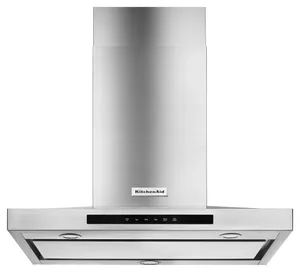
KitchenAid® 30" Stainless Steel Wall Hood
Shop This KitchenAid Range Hood
This KitchenAid wall-mounted hood combines professional-grade ventilation with a sleek stainless steel finish, perfect for any kitchen style. Its four-speed blower system delivers up to 600 CFMs of ventilation, handling everything from light simmering to heavy searing. The perimeter aspiration design ensures powerful suction, while dual-level LED task lighting provides bright, energy-efficient illumination. Maintenance is simple with dishwasher-safe stainless steel baffle filters. The vertical design includes a telescoping chimney that fits ceiling heights from 8 to 9 feet, and intuitive touch controls give you easy access to all functions.
⭐Verified KitchenAid® KVWB600DSS:
"Functions and looks great! Meets or exceeds all of my requirements."
Café™ 30" Stainless Steel Wall Mount Glass Canopy Chimney Hood
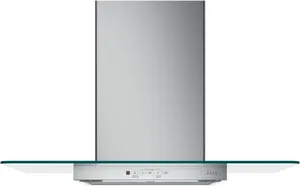
With its distinctive glass canopy and premium stainless steel, this Caf kitchen vent fan makes a dramatic design statement. This 30 inch range hood is designed to integrate perfectly with other Café appliances, creating a cohesive look in your kitchen. Its powerful 400 CFM blower system ensures your kitchen stays fresh, while the curved glass adds an open, airy feel.
⭐Featured Cafe CVW73012MSS Review:
“This is the perfect addition to our modern kitchen. Pulls plenty of air in a relatively quiet manner from our six burner propane stove.”
LG 30" Stainless Steel Wall Hood
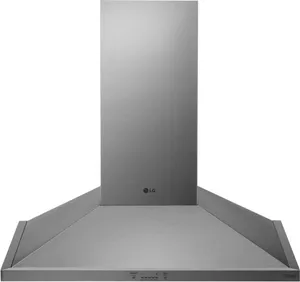
LG brings innovation and reliability right to kitchen air quality with this premium wall hood. Its powerful 600 CFM centrifugal blower effectively removes smoke, steam, and odors, no matter what you're cooking. The electronic controls are intuitive, with soft-touch buttons and an auto-delay shutoff that clears out any lingering smells after you're done.
⭐Featured LG HCED3015S Review:
"Purchased this vent a couple of weeks ago. It is sleek and does the job well with 5 fan settings. Would highly recommend."
GE Profile 30" Stainless Steel Wall-Mounted Range Hood
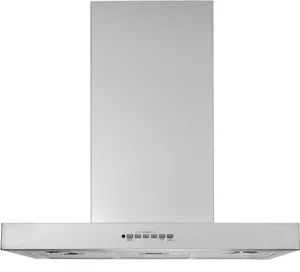
Shop This GE Profile Range Hood
GE Profile combines premium performance with sleek design in this feature-rich wall-mounted hood. The 400 CFM ventilation system offers powerful yet quiet operation, while dual LED light bars ensure clear visibility for safe and efficient cooking. The telescoping chimney fits ceilings from 8 to 9 feet, and dishwasher-safe aluminum mesh filters make maintenance easy. Electronic touch controls add modern convenience and precise functionality.
⭐Featured GE Profile UVW8301SLSS Review:
"Looks very nice, paired with GE Induction Range. Lights are bright and most importantly, the exhaust fan is strong."
Thermador® Masterpiece® 30" Stainless Steel Under Cabinet Range Hood
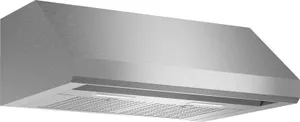
Shop This Thermador Range Hood
The Thermador HMWB30WS brings professional-grade power together with an under-cabinet design with this Masterpiece® series hood that’s sleek yet powerful. The 600 CFM internal blower offers impressive airflow while still fitting neatly into standard cabinet openings. Intelligently designed with heat sensors that automatically adjust fan speed when high temperatures are detected, this pick provides the protection you need before you know it.
KitchenAid® 30'' Stainless Steel Under Cabinet Range Hood
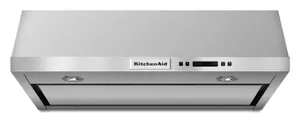
Shop This KitchenAid Range Hood<
We’re all about low-profile designs, especially when they’re amped with full performance like this KitchenAid under-cabinet range hood. At just 30” wide and designed to slip right into smaller cabinet spaces, it’s subtle, but it packs a punch with up to 600 CFMs of air circulation while operating at just 44 dBA (quieter than standard dishwashers!). If you love cooking on gas, you’re in luck because this high-performance range hood handles up to a whopping 65K BTUs of firepower with four speed levels to accommodate all your cooking needs.
⭐Featured KitchenAid® KVUB600DSS Review:
"We are very pleased to be using this high-quality and highly efficient equipment [sic]."
Samsung Bespoke 30" Clean Deep Charcoal Wall Mounted Range Hood
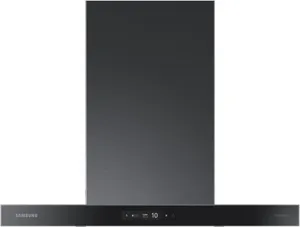
Samsung redefines kitchen ventilation with the stylish Bespoke series hood. The deep charcoal finish creates a bold focal point, while the 500 CFM ventilation system ensures powerful airflow for intensive cooking without disruptive noise. Designed with sleek, minimalist aesthetics, this 30 inch range hood seamlessly complements modern kitchens while offering smart functionality.
⭐Featured Samsung NK30CB700W33 Review:
"This is so amazingly quiet!! I can’t believe I waited so Long to get this!! I love my Samsung rang hood!!”
Bosch® 300 Series 30" Stainless Steel Pyramid Wall Mounted Range Hood
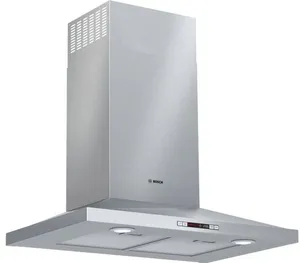
Bosch combines European engineering with sleek design in this pyramid-style wall-mounted hood. The HCP30E52UC delivers efficient ventilation with a 300 CFM blower system, ideal for most cooking needs. Its modern look enhances kitchens while ensuring quiet operation, perfect for open-concept spaces. Practical features like three-speed controls, energy-efficient LED lighting, and dishwasher-safe filters make daily use simple and maintenance easy.
Kitchen ventilation is crucial for a cooking environment that’s healthy and comfortable, and making sure your kitchen exhaust fan is installed correctly is the first step. Have questions? We’re happy to help! Stop by one of our Front Range appliance stores today to learn more about the proper way to install a range hood or to explore our top picks and many more from top brands.
Why Trust the Experts at Specialty?
For over 20 years, Coloradans have relied on us for the best in home appliances. We believe in providing a personalized experience for every customer. Our experts take the time to listen to your needs, preferences, and budget constraints, offering tailored recommendations and solutions that fit your unique requirements. Whether you're remodeling your kitchen or replacing a single appliance, you can trust our experts to provide honest, unbiased advice that prioritizes your satisfaction. A factory-certified team ensures a hassle-free experience, meticulously handling every detail from delivery to installation. Plus, with our wide variety of brands and models, you'll have access to the latest innovations, stylish designs, and reliable performance.
At Specialty Appliance, integrity, accountability, and teamwork are at the core of everything we do. We're committed to empowering you to make smarter choices and providing an exceptional customer experience. Proudly serving communities across Colorado, we're dedicated to being your trusted partner for appliance excellence.
Shop 30 Inch Range Hoods at Specialty Appliance
Whether you’re interested in the latest cooking appliances or have more questions about 30 inch range hood installation, we're here to help. Discover the Specialty Appliance difference today at one of our five showrooms across Colorado.
Learn more: 8 Best 36 Inch Gas Ranges for Stress-Free Holiday Cooking