
At a Glance
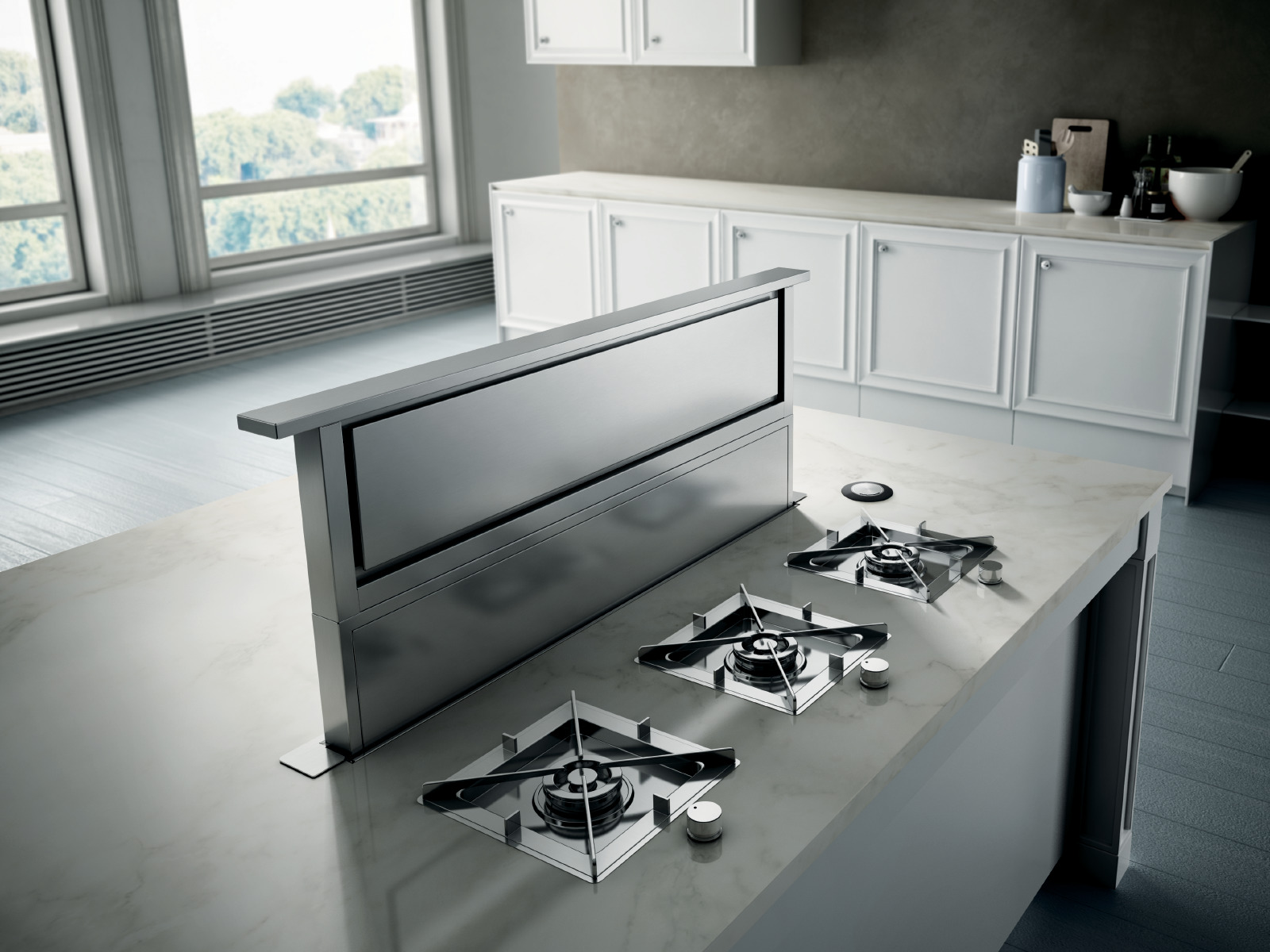
When it comes to interior design, all the rage these days is clean, simple, and thoughtful presentation, which is a meg challenge in the kitchen. It’s the busiest room in the home, after all, and function cannot be sacrificed in the name of good design. Refrigerators and dishwashers can be hidden with panel-ready fronts, and stoves with slide-in profiles help keep things sleek. But for the longest time, kitchen ventilation has been the elephant in the room—until the debut of the downdraft range hood.
These excitingly new kitchen appliances are still fresh on the scene, and we have all the details you need to know to help you decide if downdraft range hood fits with your needs and lifestyle. We cover it all, from the benefits to installation tips and tricks, plus a look at some of our favorite models on the market.
Save | Downdraft Range Hood Deals
For a touch of the unexpected, explore downdraft range hoods at Specialty Appliance.
Shop Downdraft Range HoodsHow Downdraft Ventilation Works
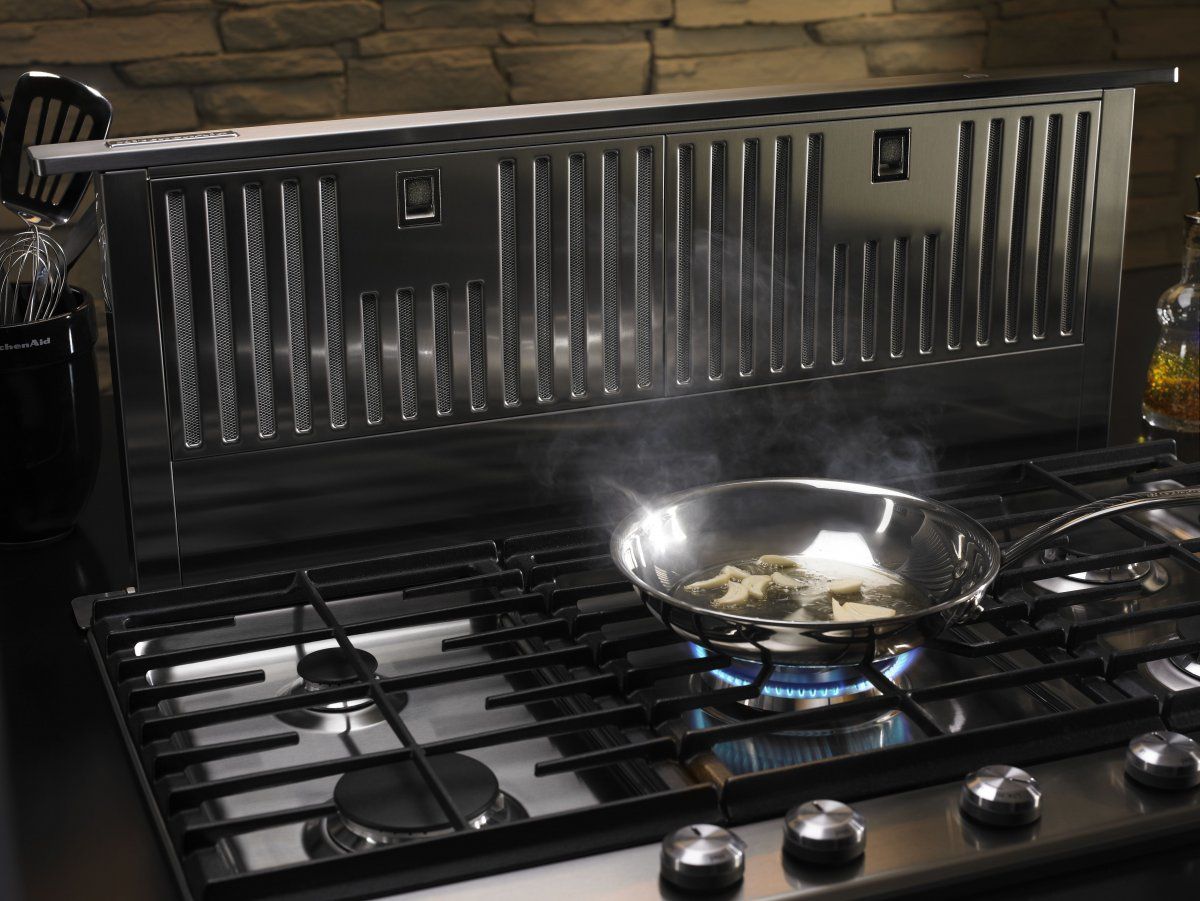
The physical mechanism behind a telescopic downdraft is quite clever. These units sit flush with a countertop when they are not in use. When you start cooking, the pop-up vent rises above the surface, using a powerful internal blower motor to ventilate kitchen air just like a traditional range hood does. Instead of capturing steam as it rises, this system draws it horizontally into the intake.
Integrated vs. Separate Units
There are two main ways to get this technology into your home. You can choose integrated ventilation, which is built directly into the center of a cooktop, or you can choose a retractable vent system. Retractable downdraft range hoods sit behind a cooktop or range and rise on command. Both offer the same amount of suction power, so the decision mainly comes down to kitchen aesthetics.
- If you want to reduce visual clutter above the natural sightline but are okay with additions to the countertop, choose an integrated downdraft range.
- For the ultimate in sleek, virtually invisible design, we recommend a telescoping downdraft range hood that is out of sight when not in use.
| Feature | Downdraft Pop-Up Vent | Standard Overhead Hood |
|---|---|---|
| Capture Efficiency | Moderate | High |
| Aesthetic Impact | Minimalist / Hidden | Bold / Focal Point |
| Installation Difficulty | Professionl (Ducting through floor) | Moderate (Ducting through ceiling/wall) |
| Cabinet Space Loss | Lower Cabinets | Upper Cabinets |
| Noise Level | Higher (Motor is closer) | Lower (Motor is higher) |
| Ideal Cooktop | Induction or Electric | High-BTU Gas |
Airflow and Ducting
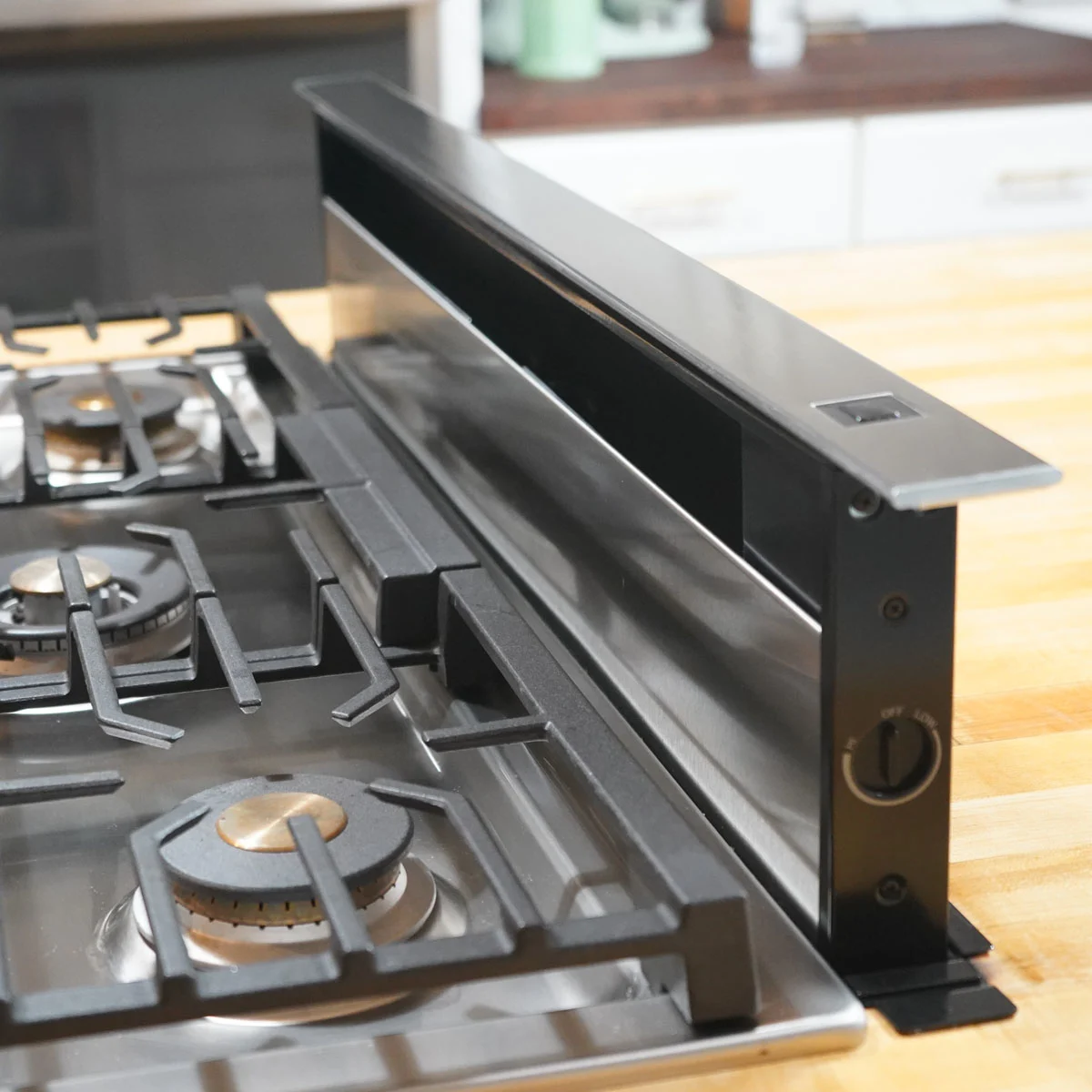
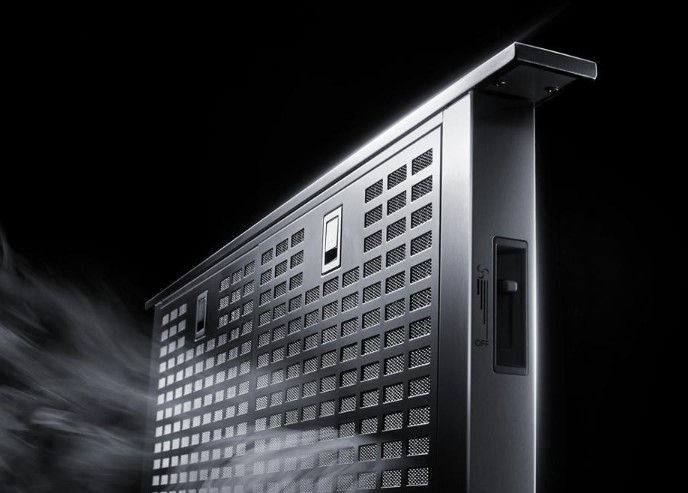
Regardless of the type of downdraft range hood you select, all the magic happens below the counter. The air intake leads to a series of grease filters, and once the air is cleaned, it moves through ductwork hidden inside your cabinetry. This air is then pushed outside through the floor or a wall.
In most cases, the motor is often located right under the counter, so these setups require precise planning for cabinet space. If you cannot vent outside, some models offer a recirculating range hood kit that cleans the air and sends it back into the room.
Learn More: High-End Kitchen Hood Ideas
Why Downdraft Ranges Work in Open Concepts
Aesthetic freedom is the biggest appeal for downdraft kitchen ventilation. In modern open-plan kitchens, cooking and living happen in the same space, and homeowners do not want a massive chimney hood breaking up the room. Using downdraft range hoods allows you to maintain a perfectly clear view from the stove to the dining area, making a kitchen feel larger and more connected to the rest of the house.
Solving Structural Issues

Sometimes, a traditional hood is not even an option. If you have vaulted or extra-high ceilings, installing a chimney duct can be structurally impossible or incredibly expensive. A telescopic downdraft solves this by keeping all the mechanical parts below the counter. It removes the need for long, unsightly duct covers stretching toward a distant ceiling.
Learn More: Island Vent Hood Tips
Understanding the Limits of Downward Ventilation
Physics is the biggest hurdle for any downward venting system. Steam, heat, and grease naturally want to go up, and a hood located above the stove has an easy job catching these byproducts. A downdraft has to work twice as hard to pull them sideways, so capture velocity is everything. If the vent does not have enough power, steam, grease, and other cooking byproducts might simply float past the intake altogether.
Gas vs. Induction
When it comes to capture, the type of cooking appliance you use matters a lot. As a result, downdraft systems are a best match for electric or induction cooktop venting since it creates less ambient heat than gas. On top of that, high-output gas stove ventilation is trickier because the powerful vent can actually pull the flame toward the intake. This can lead to uneven cooking or even blow the flame out on low settings. Plus, high-BTU gas burners work best when a vent pops up above tall pots in order to effectively capture heat.
Power and Size
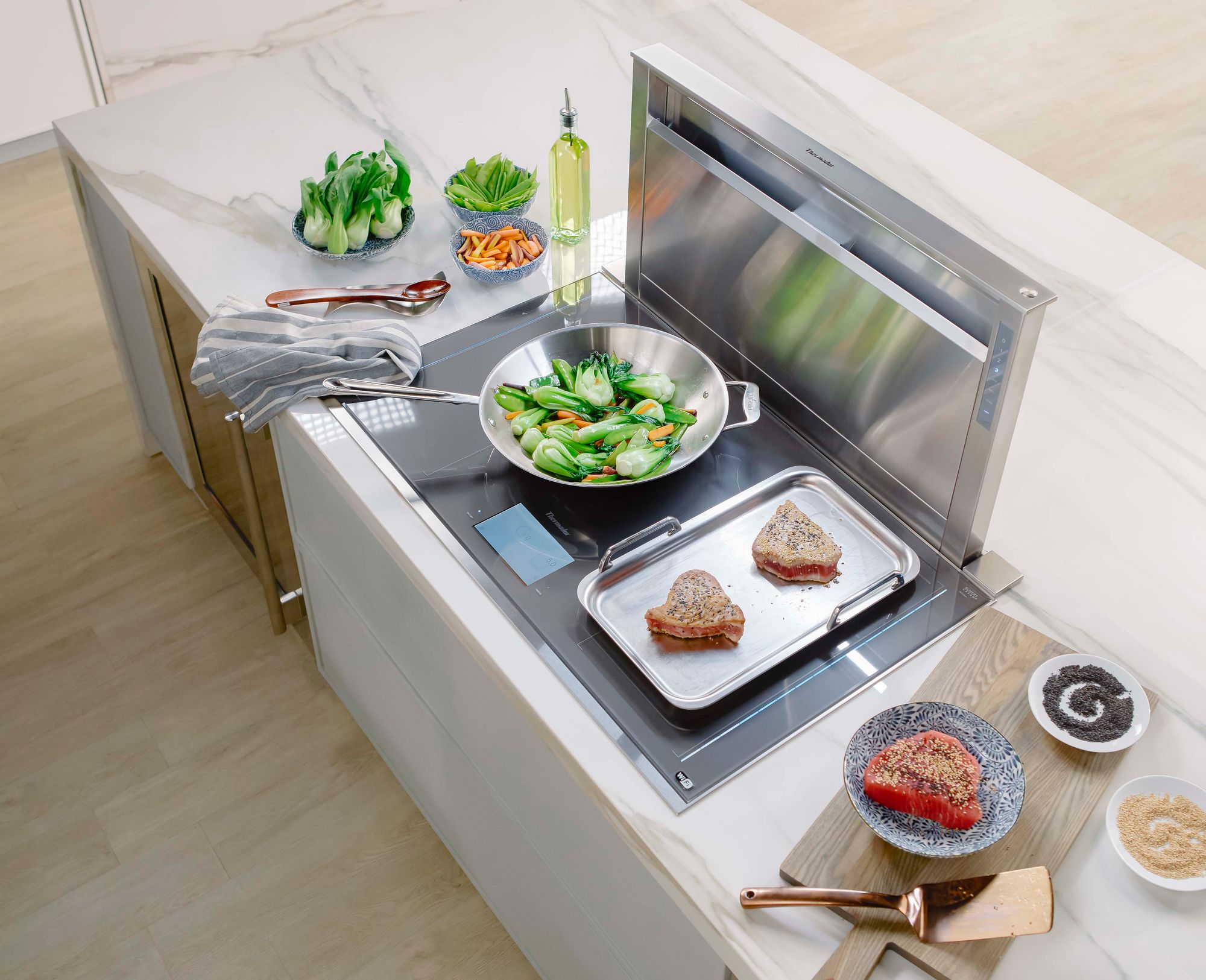
Most of these units come in standard 30-inch and 36-inch widths with heights between 10 and 18 inches tall. However, CFM ratings are what you should mostly focus on. For the best results, consider high-end downdraft range hoods with 600 to 1,200 CFMs of ventilation. What that in mind, more power also means more noise. Since the motor is often right in front of you, the Sones (noise level) can be more noticeable than an attic-mounted blower. For the best experience, we recommend downdraft range hoods with Sones levels between 1 and 3.
Learn More: Range Hood Height Guide
Planning Your Kitchen Layout for Downdraft Success
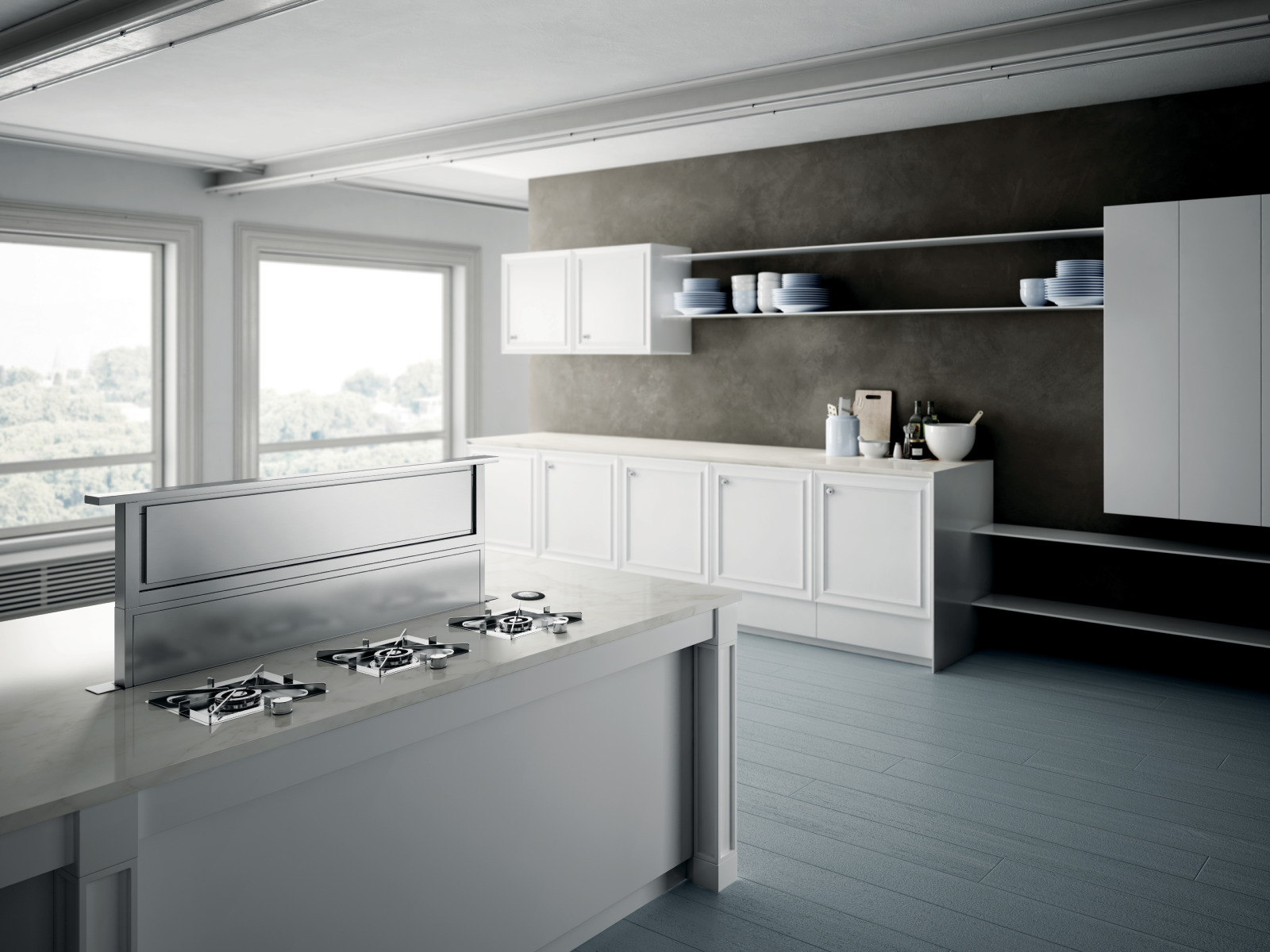
For many buyers, the surprising reality is downdraft range hoods install below the counter—not through the ceiling. The housing for the vent and the blower motor usually sits directly behind or below the cooktop. This can limit your drawer space or require a deeper-than-normal island, so it’s important to make sure your cabinet maker knows exactly which model you are using.
Ductwork and Blowers
Installing a downdraft in a new build is much easier than a retrofit. The ductwork typically goes through the floor, so if you have a concrete slab, you have to trench the floor to run the pipes. For homes with a crawlspace or basement, it is much simpler.
You also have choices for where the motor sits. An internal blower is in the cabinet, while an in-line blower is further down the duct, and a remote blower sits on the outside of the house. Remote blowers are the best way to keep the kitchen quiet while you cook.
Regular appliance maintenance is also key. Because these units have moving parts, you need to keep the tracks clean of crumbs and grease. If the pop-up mechanism gets stuck, it can be a hassle to repair. We recommend wiping down the intake and checking the filters every few weeks to keep the airflow at its peak.
Downdraft Range Hoods Pros and Cons
Choosing a hidden ventilation system is a great alternative to classic kitchen exhaust fans that often look clunky. While these units offer a stunning, clear view of your kitchen, they require more effort from the motor to capture rising heat and steam.
Pros
Maintains clear sightlines across kitchen islands.
Ideal for kitchens with high or vaulted ceilings.
Disappears into the counter when not in use.
Pairs perfectly with induction cooktop venting.
Enhances modern kitchen design aesthetics.
Cons
Reduces storage space in lower cabinetry.
Requires complex through-the-floor ducting.
Struggles to capture steam from very tall pots.
Can interfere with gas stove burner flames.
More expensive to install than standard hoods.
The Best Retractable Vents for High-End Kitchens
Want to learn more about downdraft range hoods? Then explore these luxury units that let you reclaim your space while providing powerful performance to keep up with your everyday cooking.
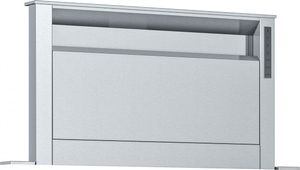
Thermador® Masterpiece® 37" Stainless Steel Downdraft Range Hood
Shop Thermador Downdraft Range Hoods
The Thermador UCVM36XS is a powerhouse with professional-grade performance in a hidden package. It features a tall 13-inch rise to help capture steam from larger pots. The sleek stainless steel finish matches the Masterpiece series perfectly. It is designed to work with flexible blower options, allowing you to choose the noise level that fits your home.
Top Features:
- Flexible Blower Options: Allows for internal, remote, or in-line motor placement.
- Full Height Rise: Reaches 13 inches to improve capture efficiency on tall cookware.
- Grease Capture: High-quality filters are dishwasher safe for easy cleaning.
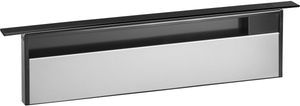
GE Profile™ Universal 36" Black on Black Telescopic Downdraft System
Shop GE Profile Downdraft Range Hoods
This GE Profile downdraft hood offers a stunning black-on-black look that blends into dark countertops. It provides a massive 500 CFM pull, which is plenty for most electric and induction cooktops, as well as gas setups. The 10-inch rise is enough to handle standard pans and small pots. It uses a simple touch control system that makes operation easy. This is an excellent choice for a modern, integrated look that does not break the budget.
Top Features:
- 500 CFM Performance: Provides strong suction to remove smoke and odors quickly.
- Black Finish: Offers a sophisticated look that blends with modern cooktops.
- Adjustable Fan Speed: Features a 4-speed fan control for custom ventilation.
⭐GE Profile UVD6361DPBB Review:
"Very happy with the amount of power in this fan/exhaust system."
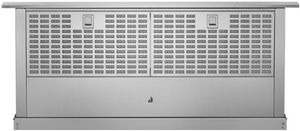
JennAir® 36" Stainless Steel Retractable Downdraft Ventilation
Shop JennAir Downdraft Range Hoods
JennAir is a leader in downdraft technology, and this 36-inch model proves why. It boasts a 14-inch rise, which is one of the highest in the industry. This height is essential for capturing steam that usually escapes lower vents. The stainless steel design is timeless and matches any high-end appliance package. It is engineered for quiet operation, even when the fan is on its highest setting.
Top Features:
- 14-Inch Rise: Captures more steam and smoke from tall stockpots.
- Hidden Controls: Keeps the look clean with controls that are only visible when needed.
- High-Capacity: A 600-CFM rating effectively captures smoke and heat up to 60,000 BTUs.
⭐JennAir JXD7036YS Review:
"I got this product installed a couple of weeks back and it just looks gorgeous. It was a professional install and the mechanics are very smooth. The fan speeds are really amazing and looks very high end."
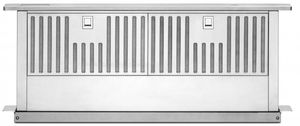
KitchenAid® 36" Stainless Steel Downdraft Range Hood
Shop KitchenAid Downdraft Range Hoods
The KitchenAid KXD4636YSS features a 585 CFM motor that can handle high-heat cooking with ease. The 14-inch rise provides excellent coverage across the entire cooking surface, and it also includes a reversible motor box, which gives you more flexibility during the installation process. With four speed settings and the ability to capture up to 65,000 BTUs of heat output, this premium range hood is more than capable of handling everyday cooking (and more!).
Top Features:
- 585 CFM Blower: Offers professional-level suction for heavy cooking.
- Installation Flexibility: Reversible motor box fits various cabinet configurations.
- High-Rise Intake: 14-inch pop-up height ensures better capture of rising steam.
⭐KitchenAid KXD4636YSS Review:
"We did a complete Kitchen remodel. This downdraft works very well. We are very pleased. I would purchase again."
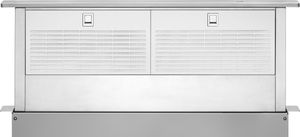
Whirlpool® 36" Stainless Steel Retractable Downdraft System with Interior Blower Motor
Shop Whirlpool Downdraft Range Hoods
Whirlpool provides a practical and efficient solution with this interior blower model. It is designed for straightforward installation since the motor is already built-in. The 4-speed touch control gives you precise command over the ventilation levels. It is a great choice for homeowners who want the benefits of a downdraft without the complexity of remote blower wiring.
Top Features:
- Integrated Blower: Simplifies installation by keeping the motor within the unit.
- 4-Speed Touch Control: Allows for easy adjustment of airflow based on cooking needs.
- Dishwasher-Safe Filters: Makes maintenance simple with easy-to-clean grease traps.
⭐Whirlpool UXD8636DYS Review:
"This system was installed in my new custom kitchen and I love it! Not only is it functional and quiet, it is quite a conversation piece. Everyone wanted to check it out! Very happy with it!"
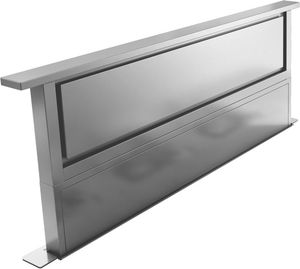
Elica Techne Series Rise 30" Stainless Steel Downdraft Range Hood
Shop Elica Downdraft Range Hoods
Elica’s signature Italian design showcases beautiful on the ERS630S1 Techne Series Rise. This 30-inch model that is perfect for smaller islands or compact kitchens. Despite its size, it offers powerful suction and a very high 14-inch rise. The build quality is exceptional, featuring heavy-duty stainless steel and precision electronics. It is a luxury choice for those who want a vent that looks as good as it performs.
Top Features:
- High-Quality Italian Design: Combines premium aesthetics with rugged durability.
- Space-Saving 30-Inch Width: Fits perfectly in smaller kitchen layouts or islands.
- Perimeter Aspiration: Improves capture efficiency by pulling air through a narrow slot.
Ask any interior designer and they’ll tell you the secret to an expertly crafted kitchen is the details. Don’t make the mistake of underestimating the potential of your kitchen ventilation. Explore new ways to use kitchen exhaust fans with downdraft range hoods from Specialty Appliance with a full selection to browse at one of our Front Range appliance stores.
Frequently Asked Questions about Downdraft Range Hoods
Downdraft range hoods are effective for most daily cooking but generally offer lower capture efficiency than overhead models. Because they work against the natural rise of steam and heat, they require more blower power to pull contaminants horizontally.
Downdraft vents can work with gas when it has a high rise and enough CMFs. We recommend at least 400 CFMs if you have a gas cooking setup.
You can install a downdraft in an existing island, but it usually requires significant cabinet modification and floor trenching for ductwork. It is much easier to include these systems during a full remodel or a new home build.
A downdraft system typically takes up about 6 to 10 inches of depth directly behind or beneath the cooktop. This usually means you will lose the top drawer and some shelf space in the base cabinet.
A minimum of 600 CFM is recommended for most 30-inch and 36-inch downdraft systems to ensure enough suction power. If you cook with high heat or a large gas range, you may want to look for units offering up to 1,200 CFM.
Yes, many downdraft range hoods can be converted to ductless systems using an optional charcoal filter kit. These kits clean the air of grease and odors before venting it back out through the cabinet toe-kick.
Why Trust Us?
For over 20 years, Coloradans have relied on us for the best in home appliances. We believe in providing a personalized experience for every customer. Our experts take the time to listen to your needs, preferences, and budget constraints, offering tailored recommendations and solutions that fit your unique requirements. Whether you're remodeling your kitchen or replacing a single appliance, you can trust our experts to provide honest, unbiased advice that prioritizes your satisfaction. A factory-certified team ensures a hassle-free experience, meticulously handling every detail from delivery to installation. Plus, with our wide variety of brands and models, you'll have access to the latest innovations, stylish designs, and reliable performance.
At Specialty Appliance, integrity, accountability, and teamwork are at the core of everything we do. We're committed to empowering you to make smarter choices and providing an exceptional customer experience. Proudly serving communities across Colorado, we're dedicated to being your trusted partner for appliance excellence.
Shop Downdraft Range Hoods at Specialty Appliance
Whether you’re interested in the latest Monogram appliances or have more questions luxury appliance brands, we're here to help. Discover the Specialty Appliance difference today at one of our five showrooms across Colorado.
Learn More: 30 Inch Range Hood Measuring