
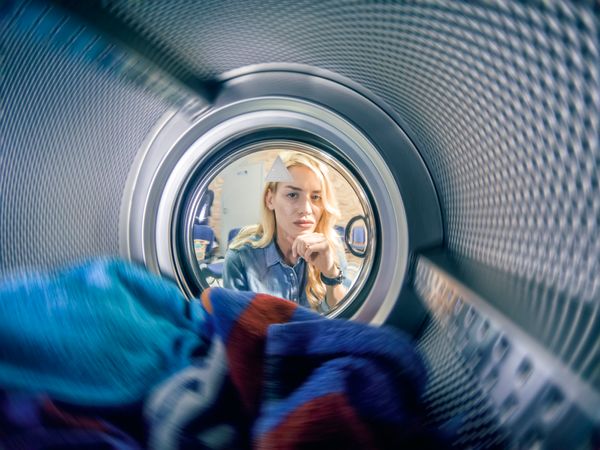
It's a frustratingly common laundry day scenario: You open the washing machine to find clothes sopping wet and still covered in suds. When a washing machine not spinning and rinsing disrupts your routine, it's time to troubleshoot.
Fortunately, many causes behind this issue can be diagnosed and fixed at home, and some solutions might not even need a professional. Understanding the most common washer problems can turn frustration into a quick fix. This guide will walk you through practical solutions and help you determine if it's time for an upgrade.
Discover Washer Deals
For reliable washers in the Front Range, shop washing machines at Specialty Appliance
Shop WashersBasic Checklist for a Washer Not Spinning or Rinsing

Before diving into complex repairs, smart homeowners start with the basics. Many times, a washing machine not spinning and rinsing stems from user error or simple fixes that take less than five minutes to correct. Running through this checklist eliminates the easy culprits first.
Detergent Overload
Did you know high-efficiency washers need much less detergent than models from yesteryear? Too much soap creates excess suds causing washer not rinsing and spinning cycles, preventing clothes from moving properly and sometimes stopping the cycle entirely.
Use only the recommended amount of HE detergent (each brand specifies on the back of the container). If you've used regular detergent in an HE machine, run an empty cleaning cycle to clear out leftover suds.
An Unbalanced Wash Load
Heavy wash items like towels and blankets can create an imbalance when bunching up on one side of the drum. This prevents the washer from spinning at full speed. Top load washers are particularly prone to this issue, as items can wrap around the agitator.
✅ For top load washers: Redistribute the load evenly around the agitator and restart the cycle. For top loaders with an impeller disc, use the donut loading method.
✅ For front load washers: If the drum is too full, remove a few items. Clothes need space to tumble freely.
Wrong Cycle
Certain wash cycles—such as the delicates cycle—intentionally use slower spin speeds. A washer that won't spin quickly might just be following its programming. Check the selected setting and switch to a normal or heavy-duty cycle for standard loads. Delicate and hand-wash cycles use gentle agitation and slow spins, which can leave clothes extra wet.
Washer Lid Switch
This safety feature stops the washer from spinning if the lid is open. If the switch is broken, the machine will fill and agitate but won't enter the spin cycle.
✅ For top load washers: Close the lid firmly; if you don't hear a click, the switch may need replacement.
✅ For front load washers: These models use door latches with sensors. A front load washer won't tumble or spin if the latch is broken or the sensor fails to detect that the door is properly closed.
3 Common Reasons a Washer Isn't Spinning
When a basic checklist fails, three key mechanical issues often cause a washing machine not spinning. Knowing how these parts function and their fixes helps homeowners decide between DIY repairs or hiring a technician.
A Broken Washer Drive Belt
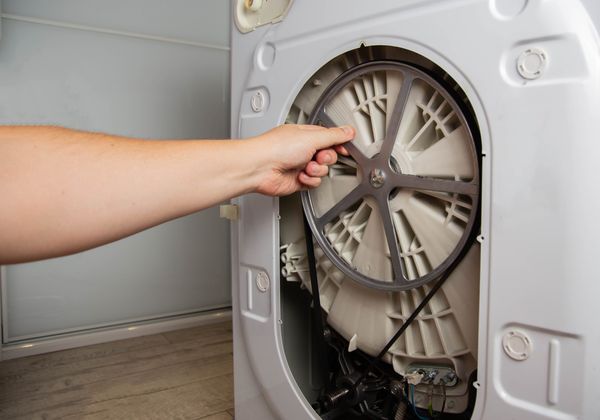
The drive belt connects the motor to the drum and is responsible for spinning clothes. Over time, a rubber washer drive belt can wear, crack, or snap. If the drive belt breaks, the motor will run, but the drum won't spin.
Signs of a broken drive belt:
✔The washer fills, but the drum is stationary.
✔A burning rubber odor is present.
✔The motor runs, but the drum does not turn.
Can this be DIY-ed? For most homeowners, this is a manageable DIY task for those with basic appliance repair skills. A replacement drive belt typically costs $15-$30. Professional repair, including parts and labor, usually ranges from $150 to $200.
How to replace a washer drive belt:
- Unplug the washer and access the internal components by removing the back (top load) or front (front load) panel.
- Locate the drive belt around the motor and drum pulleys.
- Remove the old belt and check the pulleys for any damage.
- Loop the new belt around the motor pulley, then stretch it over the drum pulley.
- Turn the drum by hand to ensure the belt is correctly aligned.
- Reassemble the panels and run a test cycle.
Damage to a Washer Motor Coupling
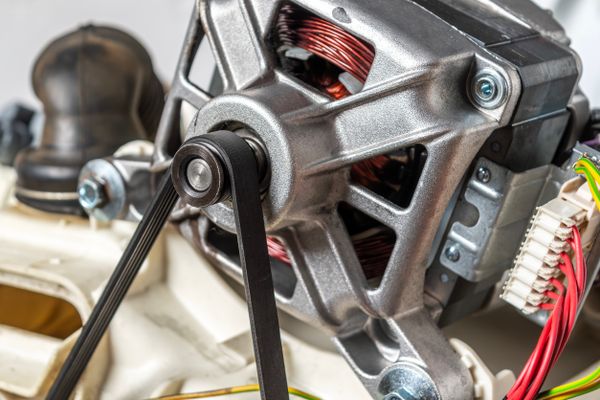
For top load washers, the motor coupling connects the motor to the washer transmission. This small plastic part can break if the washer is overloaded. When it fails, the washer stopped spinning even if the motor runs.
Signs of a damaged motor coupling:
✔Motor runs, but drum doesn’t agitate or spin.
✔Loud grinding noise during the wash cycle.
✔Washer works intermittently.
Can this be DIY-ed? Yes, but it requires more disassembly than a drive belt replacement. Motor couplings cost $10-$25. Professional repair costs $100-$175.
How to replace a washer motor coupling:
- Unplug washer and shut off its water supply.
- Remove the cabinet or access panel.
- Locate and disconnect the motor from the coupling.
- Replace the broken coupling pieces.
- Align and install new coupling.
- Reassemble the washer and run a test wash.
A Clogged Washer Drain
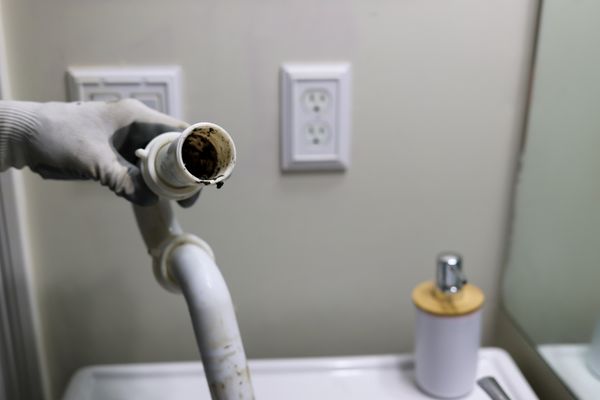
A clogged drain traps water in the drum, preventing the washer from spinning or causing it to spin slowly. This problem often leads to a washing machine not spinning and rinsing because the standing water disrupts both cycles.
Signs of a clogged drain:
✔Water in the drum after the cycle.
✔Longer cycle times.
✔A washing machine not draining or making gurgling noises.
Can this be DIY-ed? Yes, this is a very common and manageable fix. Clearing the clog yourself is often free. Professional drain cleaning costs between $100 and $200.
How to unclog a washer:
- Unplug the washer and access the drain hose.
- Prepare for water spillage with a pan or towels.
- Disconnect the drain hose.
- Visually inspect for blockages like lint or coins.
- Use a plumbing snake or high-pressure water for deeper clogs.
- Reconnect the hose, ensuring it's not kinked.
- Run a rinse and spin cycle to test.
4 Reasons Why a Washer Isn't Rinsing
When clothes come out of the washer still covered in soap residue or the rinse cycle seems to skip entirely, specific components are likely malfunctioning. These four issues directly impact the rinsing process and require targeted washer troubleshooting to identify and resolve.
A Broken Washer Drain Pump
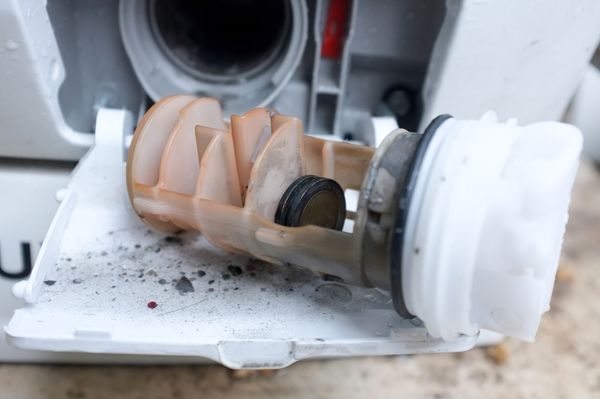
The drain pump removes water during drain and spin cycles. If it fails, water can't exit the drum, preventing fresh rinse water from entering. A washing machine not rinsing is often caused by a clogged or failed drain pump.
Can this be DIY-ed? It depends on the issue. If cleaning fails, the pump motor may need replacing. New pumps cost $75-$150, with professional installation adding $75-$150. This is a complex repair that’s best handled by technicians.
The Washer Water Inlet is Blocked
The water inlet valve regulates hot and cold water flow into the washer. Over time, mineral deposits and debris can clog the inlet screens, reducing water flow during the rinse cycle and leaving clothes soapy and wet.
Can this be DIY-ed? Yes, cleaning the inlet screens is simple. Cleaning costs nothing and replacement screens are $5-$10. This quick, 15-minute fix can greatly improve rinse performance.
How to fix a blocked washer inlet:
- Turn off the water and unplug the washer.
- Disconnect hot and cold hoses from the washer.
- Locate and remove inlet screens with needle-nose pliers.
- Rinse screens under water to clear debris.
- Replace damaged screens if needed.
- Reinstall screens, reconnect hoses, and check for leaks.
A Damaged Washer Inlet Valve
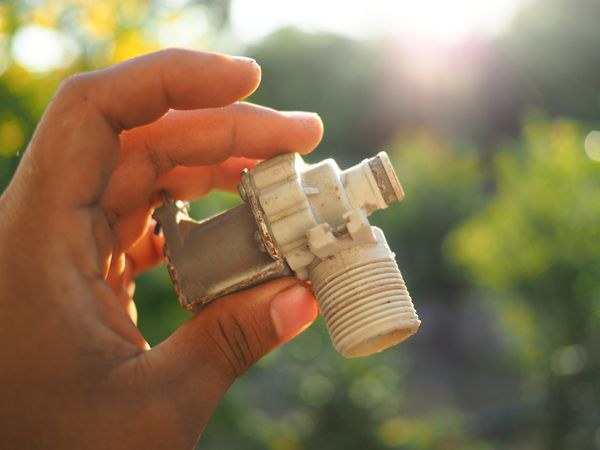
If a dirty inlet screen isn’t the solution to your washer not rinsing, a faulty inlet valve may be the problem. A washer inlet value uses solenoids to control water flow based on signals from the control board, preventing water flow during the rinse cycle.
Can this be DIY-ed? While skilled DIYers who know how to handle electrical connections may be able to perform this job, trained technicians are recommended. Replacement valves cost $50-$100, and professional repair averages about $150-$300.
A Failed Washer Pressure Sensor
A washer’s pressure sensor (also known as the water level sensor) monitors water levels in the drum. It signals the control board when there's enough water for a cycle. A faulty sensor can cause the washer to underfill during the rinse cycle or skip it entirely.
Can this be DIY-ed? While diagnosing it requires a multimeter, replacement is straightforward for most people. A new pressure sensor costs $30-$80. Professional installation can total $150-$250. If you're uncertain about the diagnosis, professional washer repair is the best option.
How to test a washer pressure sensor:
- Unplug the washer and find the sensor, typically near the control panel.
- Detach the air tube and electrical wiring.
- Test for continuity with a multimeter based on the manufacturer’s guide.
- If the readings are off, the sensor is faulty.
Should I Replace My Washer?
Sometimes, fixing a washing machine not spinning and rinsing isn't worth the cost. Repairs can be expensive, and older machines often break down again. Knowing when to repair versus replace can save you money and headaches.
Consider replacing your washer if:
- The issue keeps recurring: Repeatedly fixing the same problem can cost more than buying a new machine.
- The washer is over 10 years old: After a decade, parts wear out, efficiency drops, and repairs become more frequent and difficult.
- Multiple problems exist simultaneously: If your washing machine quit spinning and also has other issues like leaks or strange noises, the combined repair bill may be too high.
- Repair costs exceed 50% of a new washer's price: For example, if a repair costs $400 and a new, similar model is $700, replacement is the smarter financial choice.
Explore Reliable Washers at Specialty Appliance
When repair costs mount or a washer reaches the end of its useful life, choosing the right replacement makes all the difference. These washers represent top performers in their categories, offering the reliability and features today's households need.
Electrolux 4.5 Cu. Ft. White Front Load Washer
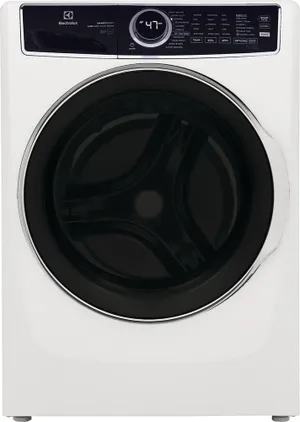
This model is a fantastic choice if you're looking for high-end cleaning performance without the premium price tag. The Electrolux ELFW7637AC offers luxury features at a mid-range price. With a spacious 4.5 cubic foot capacity, this front load washer tackles tough stains using LuxCare wash technology, which precisely controls temperature and detergent levels. Together with Perfect Steam technology and SmartBoost, it’s a powerful laundry solutions over 7,300 owners rate 5/5.
⭐Featured Electrolux ELFW7637AW Review:
"I'm extremely happy with my purchase of Electrolux Washer and Dryer. These machines are quite and my clothes smell fresh and clean."
GE® 4.8 Cu. Ft. White Smart Front Load Washer with UltraFresh Vent System
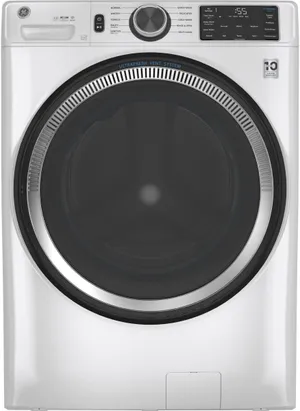
With nearly 5 cubic feet of wash capacity, this smart washer offers next-level convenience. It features built-in WiFi, allowing you to control and monitor laundry from anywhere using a smartphone app or voice assistant. The UltraFresh Vent System with OdorBlock circulates air to prevent musty smells, while Dynamic Balancing Technology ensures quiet operation by automatically redistributing clothes to minimize vibration.
⭐Featured GE GFW550SSNWW Review:
"I absolutely love my GE washer and dryer and I was very [sic] skeptical a many people say front load washer and dryers don’t clean as well but in my opinion they do better than any other washing machine! I’m so glad I went with my GE."
LG 2.4 Cu. Ft. White Front Load Washer
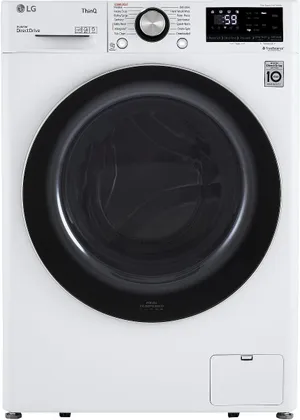
The LG WM1455HWA is compact yet mighty, delivering big performance for smaller households and laundry needs. Despite its smaller size, it handles tough stains and large loads with ease, making it an excellent choice for those who need high performance without sacrificing space. Included are 6Motion technology with up to six different wash motions for optimal fabric care, ColdWash technology with superior results with energy savings, and a Direct Drive Motor that resists wear and tear.
⭐Featured LG WM1455HWA Review:
"I waited till I've had this washer for over a month to write my review. I love everything about it. It's easy to use. The clothes come out really clean and I like the way I can use the app. Because it spins so fast it does make a little bit of noise on spinning but is to be expected. This is my first front load washing machine and I'm so glad I got it. Thanks LG."
Learn More: LG Washer Reviews You Should Read Before Buying
Maytag® 5.0 Cu. Ft. White Front Load Washer
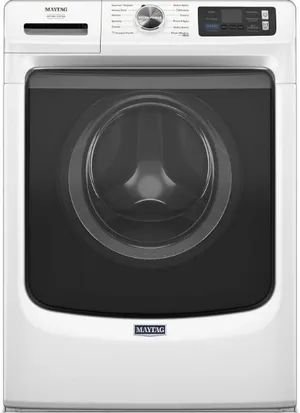
Make tackling large loads easier with this Maytag washer featuring 5 cubic feet of tub volume. That’s on top of the Extra Power button with enhanced stain removal, stronger agitation, and longer wash times, while Advanced Vibration Control ensures quieter operation. For added convenience, the Fresh Hold option keeps clothes fresh for up to 12 hours after the cycle ends. Plus, the Quick Wash cycle handles small loads in under 30 minutes. Built for durability, this washer features a 10-year limited parts warranty on the drive motor and wash basket.
⭐Featured Maytag MFW7020RW Review:
"Very happy with my new washer and dryer Pet Pro. Features and extra filters are user friendly. Additionally the black color looks great."
GE® 4.3 Cu. Ft White Commercial-Quality Top Load Washer with Stainless Steel Basket
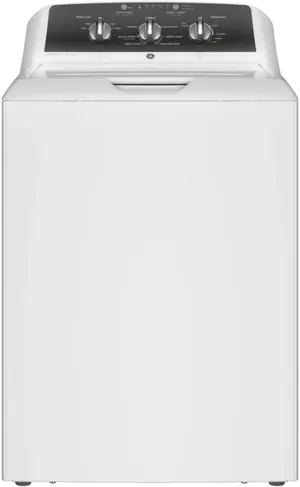
This GE top load washer delivers commercial-grade durability to your laundry routine with a 4.3 cubic foot capacity and a stainless steel wash basket that resists chips, snags, and corrosion. Designed for performance and efficiency, it offers customizable options to handle everything from delicate loads to heavily soiled items. Enjoy better results with a Dual-Action agitator and precise water levels to handle loads of every size.
⭐Featured GE GTW525ACWWB Review:
"I love this washer! It just has basic features, but the fact that you can control the water and it actually spins both ways so it gets the clothes super clean! I’ve only had it for a month, but I’ve washed probably 30 loads in it and I’m so happy with it!"
Learn More: LG vs GE Washers: Performance, Features & Value
Speed Queen® FF7 3.5 Cu. Ft. White Front Load Washer
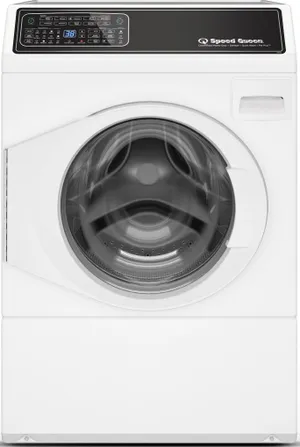
The only brand with a 25-year lifespan and the power to wash 40 lbs. of laundry a day, Speed Queen brings its commercial-grade durability to the home with the FF7 front load washer. Built to last, this 3.5 cubic foot machine is backed by an industry-leading warranty and designed for heavy daily use. Its simple controls and industrial-quality construction make it a reliable choice, especially for those researching how to fix a washing machine that does not spin.
⭐Featured Speed Queen FF7011WN Review:
"Clothes smell clean again no streaks on darks. Quiet operation and fast cycles."
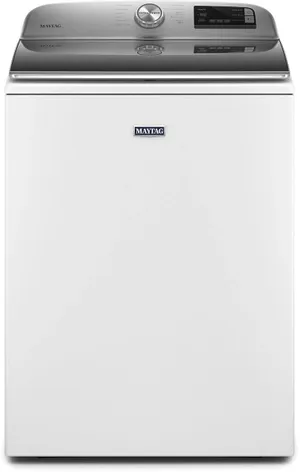
Maytag® 4.7 Cu. Ft. White Agitator Top Load Washer with Extra Power
Shop This Maytag Top Load Washer
This Maytag top loader offers a spacious 4.7 cubic foot capacity with a blend of traditional agitator design and modern efficiency. Its PowerWash agitator delivers powerful cleaning, while features like Deep Water Wash and Auto Sensing ensure thorough, efficient performance for any load. More than 800 MVW6230RHW reviews agree this top load washer is the perfect experience worthy of 5/5 stars.
⭐Featured Maytag MVW6230RHW review:
"I’ve owned this washer for 6 weeks and so fat I’m very satisfied with my purchase. The options for wash cycles are nice, and the agitation works well and gets my clothes clean. I would purchase this unit again."
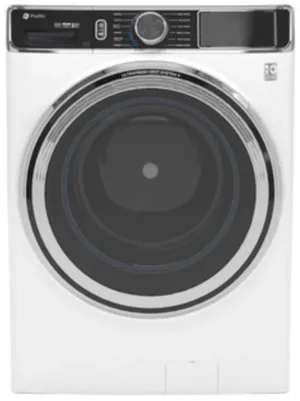
GE Profile™ 5.3 Cu. Ft. White Front Load Washer with UltraFresh™ Vent System+ with OdorBlock™
Shop This GE Profile Front Load Washer
Smart technology and advanced features on this GE Profile front loader deliver powerful, efficient cleaning. With built-in WiFi and the SmartHQ app, you can control cycles remotely, get push notifications, and download specialty cycles. The UltraFresh Vent System with OdorBlock and Microban antimicrobial technology keep the washer fresh and odor-free, while Dynamic Balancing ensures quieter operation by redistributing unbalanced loads.
⭐Featured GE Profile PFW870SSVWW Review:
"Clothes are clean and I can actually reach the out of the washer. I haven't read the manual (although plan to) in order to understand be able to use some of the features. I am a 'simple' person and am happy with the capacity, efficiency, and as a small stature person able to get to my clothes without a stool.”
When homeowners have questions about their washer, they can count on the experts with more than 20 years of experience in the Front Range. From recommended products to appliance solutions, Specialty Appliance is the local resource for everything appliances. Visit today to see what's new and why it's time to upgrade to a washer that keeps up with daily needs.
Learn More: 7 Game-Changing Features in the New Samsung Washer and Dryer Combo
Why Trust the Experts at Specialty?
For over 20 years, Coloradans have relied on us for the best in home appliances. We believe in providing a personalized experience for every customer. Our experts take the time to listen to your needs, preferences, and budget constraints, offering tailored recommendations and solutions that fit your unique requirements. Whether you're remodeling your kitchen or replacing a single appliance, you can trust our experts to provide honest, unbiased advice that prioritizes your satisfaction. A factory-certified team ensures a hassle-free experience, meticulously handling every detail from delivery to installation. Plus, with our wide variety of brands and models, you'll have access to the latest innovations, stylish designs, and reliable performance.
At Specialty Appliance, integrity, accountability, and teamwork are at the core of everything we do. We're committed to empowering you to make smarter choices and providing an exceptional customer experience. Proudly serving communities across Colorado, we're dedicated to being your trusted partner for appliance excellence.
Shop Reliable Washers at Specialty Appliance
Whether you’re interested in the latest laundry appliances or have more questions about a washing machine not spinning and rinsing, we're here to help. Discover the Specialty Appliance difference today at one of our five showrooms across Colorado.
Learn more: Denver Washer and Dryer Buying Guide: Specialty Appliance's Laundry Lineup